
- Item type
- Object
- Provenance
- Transferred from the Department of Experimental Psychology, University of Oxford, of 2000. Acquired from RAF Biggin Hill by the Department of Psychology, University of Oxford, in 1985.
- Primary inscriptions
- "PART No. RE2327 REF. No. SX251 SERIAL No. 20 RICHMOND ELECTRONICS (MARKYATE) LTD." on a metal tag at the rear
- Dimensions
- Height: 310mm Width: 450mm Depth: 260mm Weight: 11.1kg
- Inventory No
- 84123
- Accession Number
- 2000-3/14
Description
This electric instrument is built after the design of Kenneth Craik's 'Control of Velocity 'or 'Pursuit Rotor' testing instrument c. 1939, see Inv 12881. The machine was used to assist in the selection of fighter pilots. The subject uses a steering wheel to direct a pointer so that it either hits or misses metal dots on a rotating drum.
This model has a blue-painted heavy metal base and motor housing with a brushed steel handle on top. The motor rotates a horizontal metal drum which has a plastic test sheet, consisting of a line of punched holes, glued onto it. The line begins at the left side of the drum and winds around to the right. In front of the drum is a brass bar on rack and pinion that is attached to the motor housing. On this is mounted the a small metal hammer, with electrcal wiring attached that fits in the hole punches to contact the metal drum. On the left hand side of the instrument is a wooden steering wheel for moving the hammer to the left and right.
"84123.1 = Wooden steering wheel has a chip on the edge but otherwise good condition. Blue metal body has some accretions on the surface, possibly from use - grease/oil residue near handle on proper LHS at back. White residue on the metal at the back, around the power cable (cable had been cut). Small loss of blue paint on the top surface of the base. Small amount of tarnishing to the metal screws. Discolouration to the plastic wrap on the wire connectors. White cover on drum discoloured and dirty. The brass is tarnished slightly and scratched from use. Dust on surface, clean required.
Paper label has been folded - crease mark along centre. Slight curving and abrasion on edges of paper."
Related Items
More related items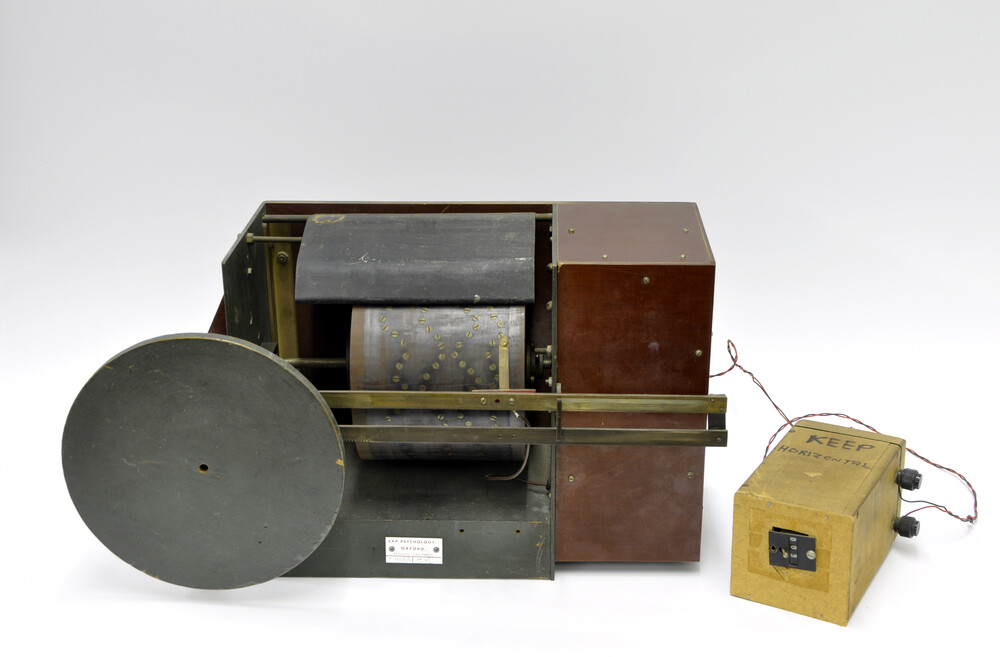 Control of Velocity Test, by Kenneth Craik, English, c. 1939Inventory Number 12881
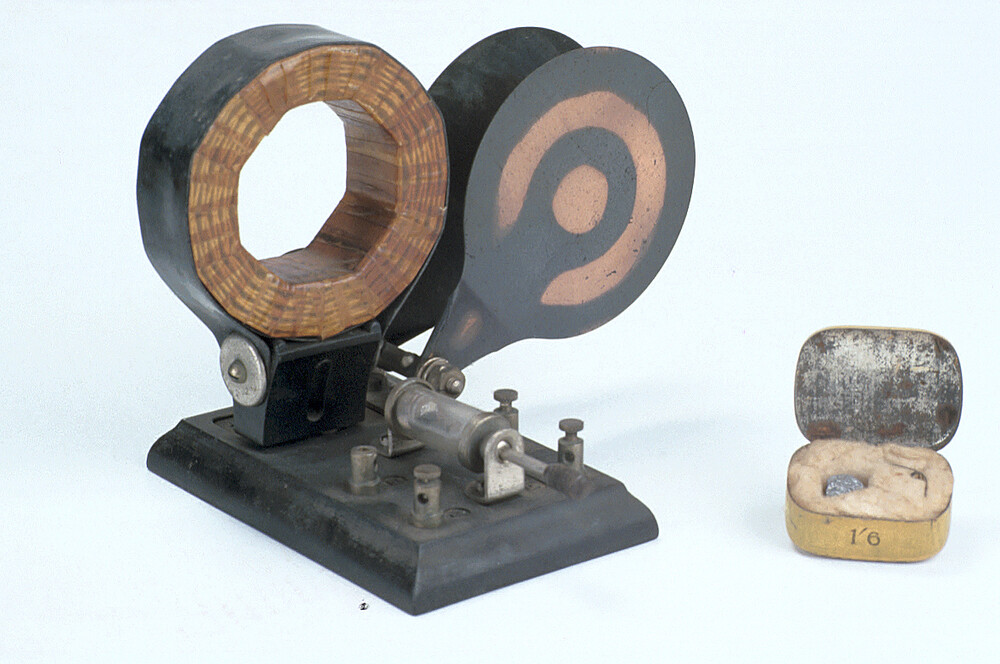 Crystal Set Radio, by Lissen Ltd, Richmond, English c. 1925Inventory Number 63659
- Metal Label from a Servo Actuator (an Industrial Process Control Instrument), by Elliott Process Automation Ltd., London, 1968Inventory Number 13439
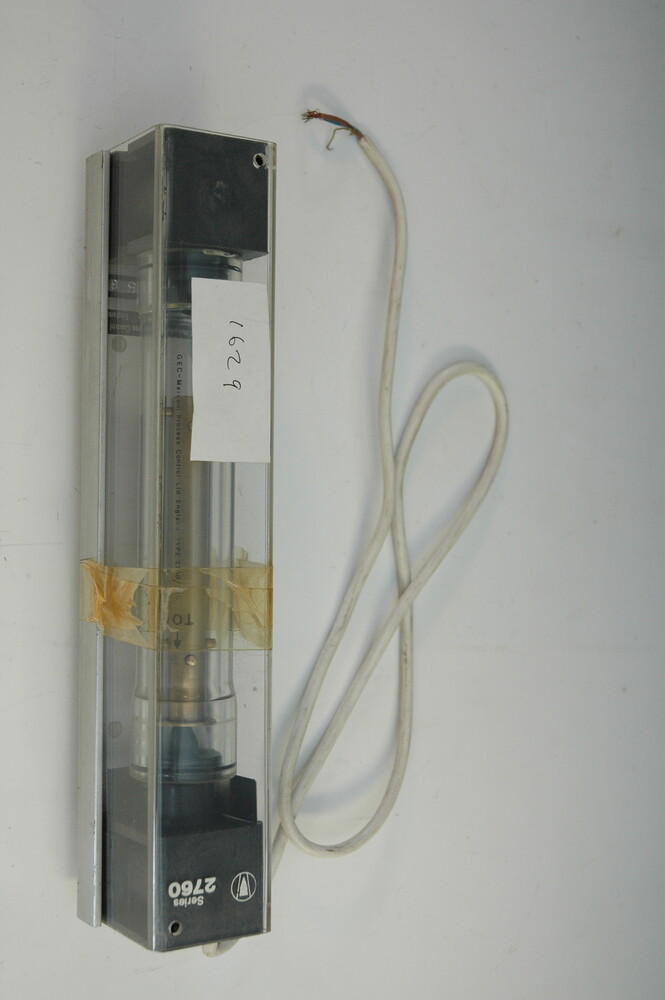 Flowmeter Transducer (with sliding lid), by GEC-Marconi Process Control Ltd., 1970sInventory Number 13060