
- Subject
- Electronic instruments
- Item type
- Object
- Makers
- Robert W. Paul
- Provenance
- Purchased from R. Hammond Esq. in 1970.
- Primary inscriptions
- "AYRTON-MATHER / GALVANOMETER / PATENT. / ROBT. W. PAUL. LONDON N." on lid; "NO. 653." inside body chamber.
- Object type
- Galvanometer
- Dimensions
- Diameter: 175mm Height: 194mm Weight: 2685g
- Inventory No
- 59107
- Accession Number
- 1970-20
Description
Ayrton-Mather Galvanometer, by Robert Paul, London, late 19th century. Cylindrical object that has a raised base with three round detachable feet. The main body of the instrument has a round window with a frame like a ship's porthole, through which the mechanism can be viewed. There are two knobs that stick up from the base, one of them just below the widow and the other to the right of the window. There is a third knob that protrudes outwards from the base, positioned between the two upward-facing ones. The lid/top is removable.
William Ayrton (1847-1908), London physicist and professor of Electro techniques, is famous for his work related to electrical measurement devices (wattmeter). Ayrton, in co-operation with T. Mather, realised a mobile circuit galvanometer, constituted by an extended coil whose geometric shape was studied for achieving the top "promptness" of the pool. To this purpose the core is eliminated and consequently no radial field will exist.
Related Items
More related items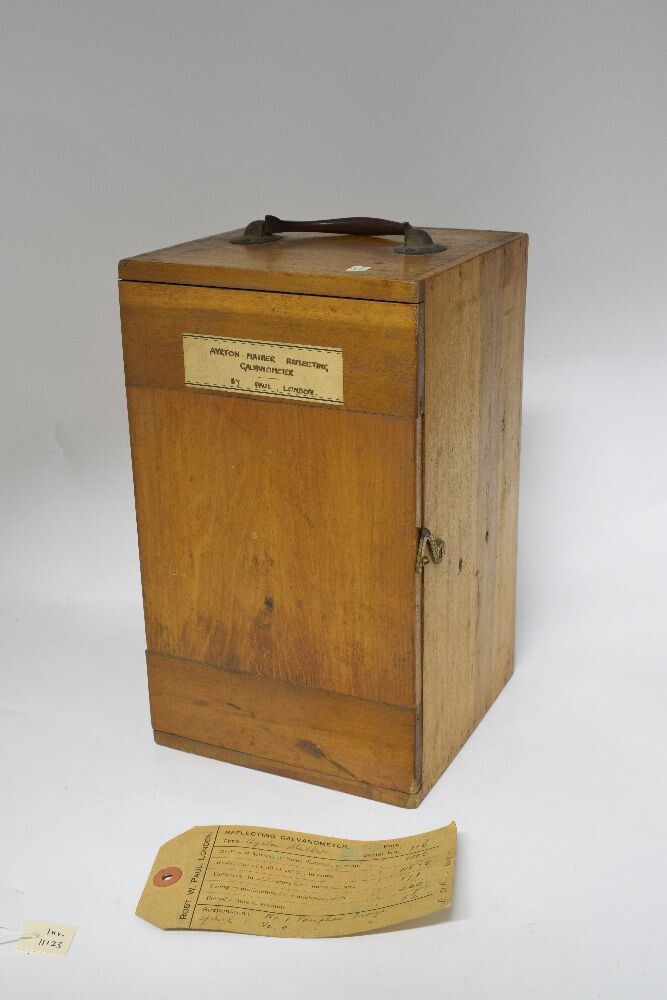 Case for Ayrton-Mather Reflecting Galvanometer, by Paul, LondonInventory Number 11123
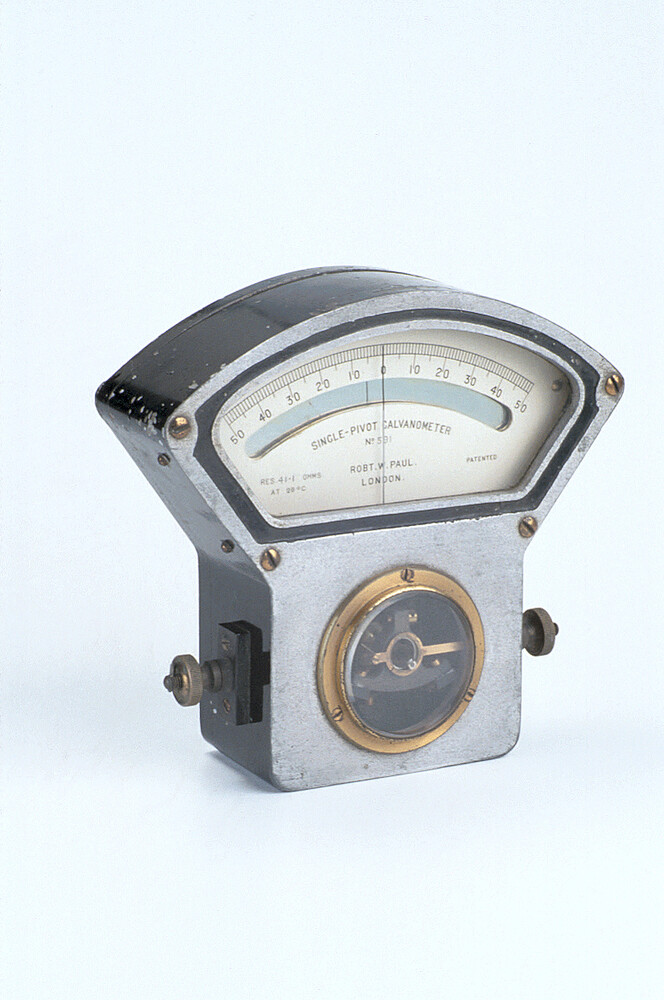 Moving Coil Galvanometer - Unipivot Needle Pattern, by Robert W. Paul, London, c. 1910Inventory Number 68773
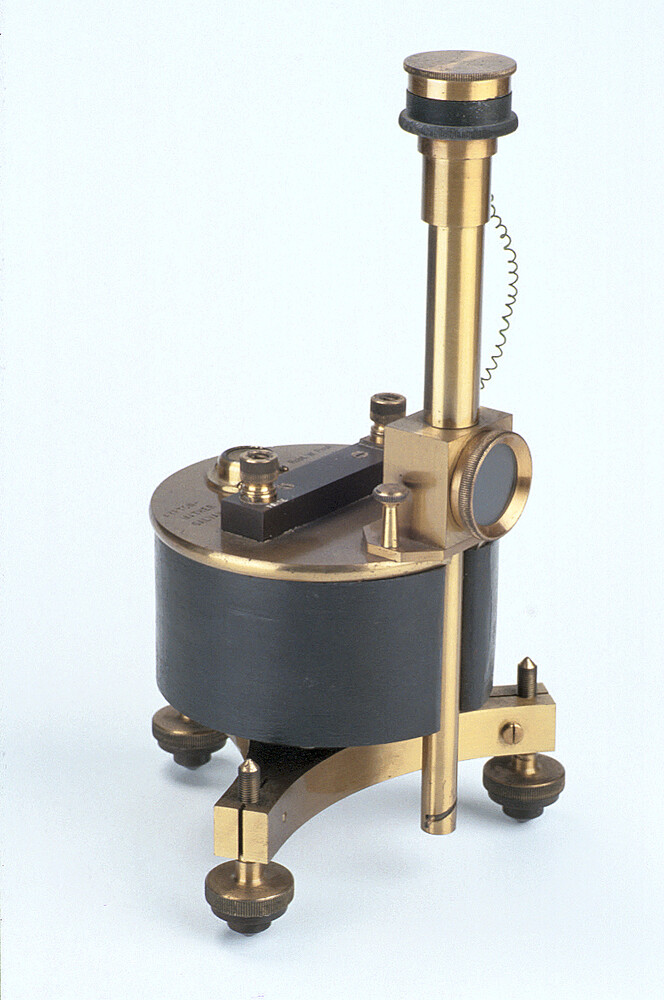 Reflecting-Mirror Type Galvanometer with Label, by Robert W. Paul, London, c. 1895Inventory Number 64051
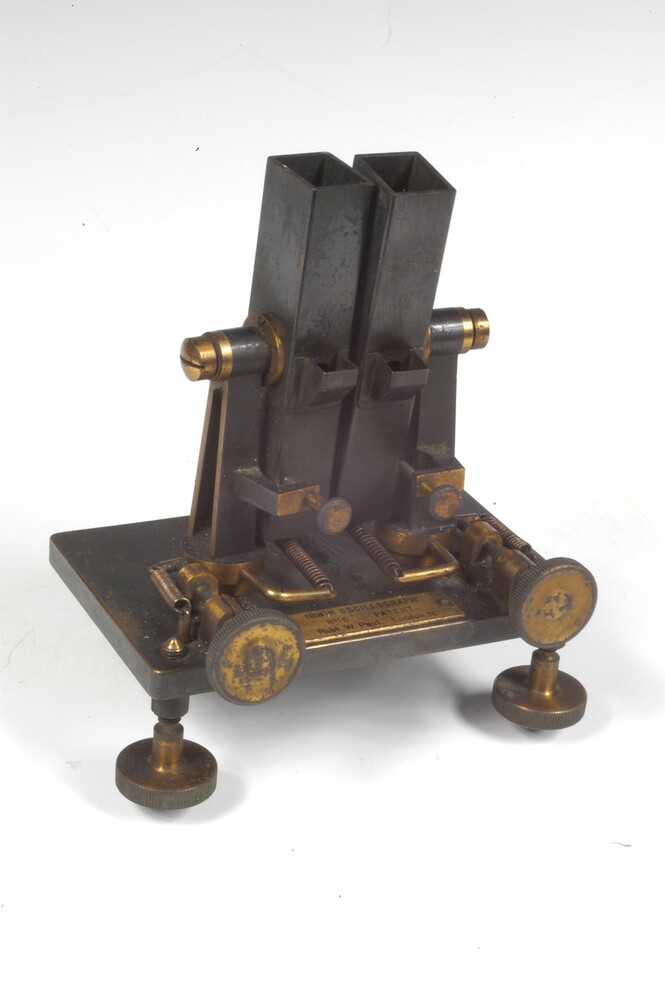 Irwin Oscillograph, by Robert W. Paul, London, c.1919Inventory Number 30624