
- Item type
- Object
- Makers
- Jesse Ramsden
- Provenance
- Donated by Royal Microscopical Society.
- Primary inscriptions
- "Ramsden London" engraved on barrel.
- Object type
- Microtome
- Dimensions
- Diameter: 60mm Height: 97mm Width: 185mm Depth: 90mm Weight: 1334g
- Inventory No
- 65389
Description
Cylinder consists of a brass sleeve over an ivory (?) body, which has a tringular section hole to receive the specimen. The micrometer screw at the base directly propels the specimen upwards towards the cutting blade. There is a screw to keep the specimen in place; it fits into one of two threaded holes in the body of cylinder, and is turned with a square-arbor thumb screw kept in the case. The purpose of an additional small thumb screw on the edge of the top plate is not clear; it is pierced as if to receive a thread. The fitted wooden case contains an additional blade.
A microtome is for cutting thin slices of specimens for microscopic examination. Designed for cutting sections of twigs, this is an unusual pattern, that was never continued. It is the first section cutting engine, incorporating a controlable and measurable fine advance. The rotary blade is difficult to make, and very difficult to keep sharp. It is claimed that the inventor was Alexander Cumming, F.R.S., clockmaker to king George III, and the first models were made c. 1770. Ramsden is better known for instruments for astronomy, navigation and surveying.
Related Items
More related items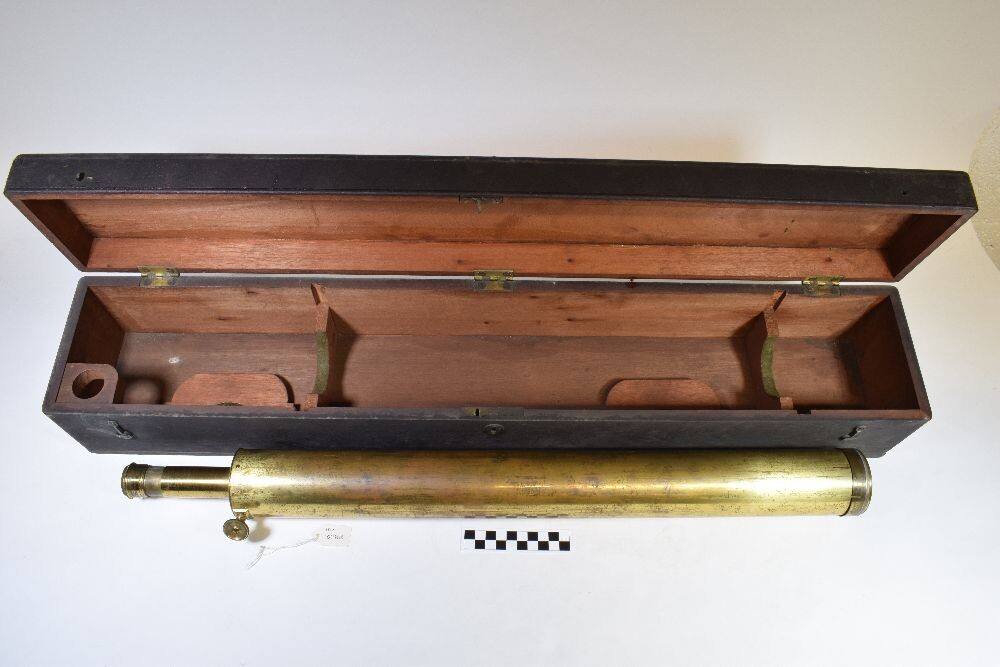 Refracting Telescope, by J Ramsden, LondonInventory Number 10088
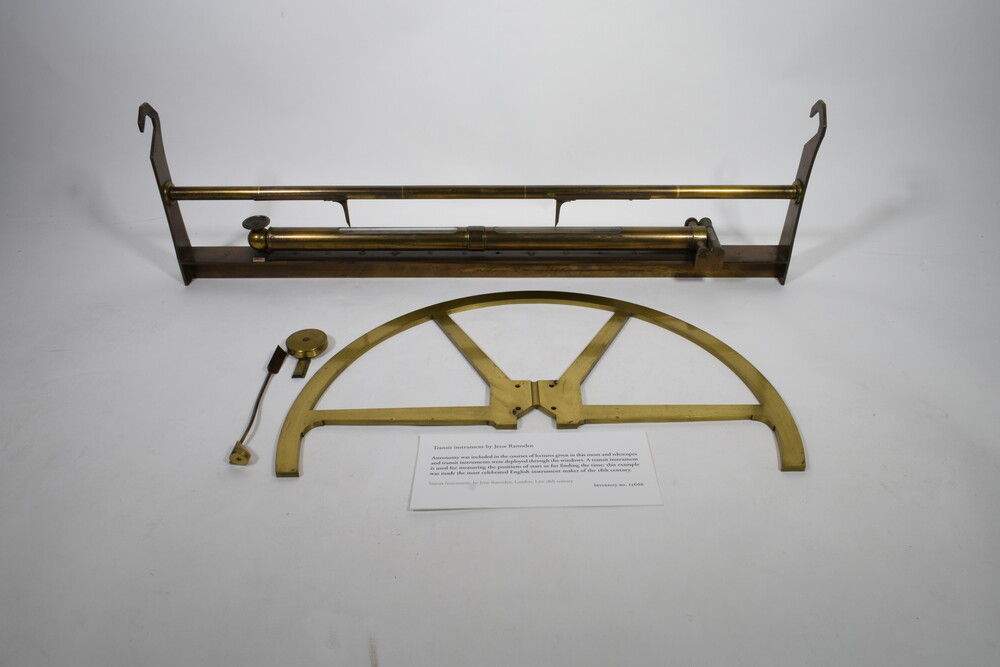 Transit Instrument, by Jesse Ramsden, London, Late 18th CenturyInventory Number 12666
- Transit Instrument and case, by Jesse Ramsden, London, Late 18th CenturyInventory Number 12666
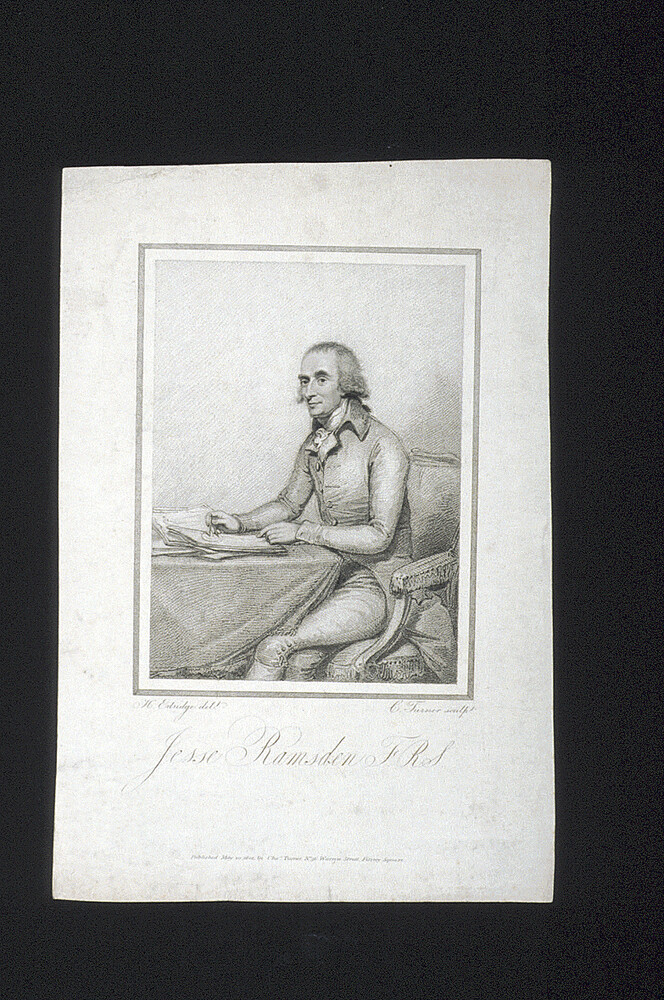 Print (Stipple Engraving) Jesse Ramsden, drawn by H. Edridge, engraved by C. Turner, published by Chas. Turner, 56 Warren Street, Fitzroy Square, London, 1801Inventory Number 78232