
- Subject
- Print Collection
- Item type
- Object
- Provenance
- Bequeathed by G. H. Gabb in 1948.
- Primary inscriptions
- Caption below image: 'J. T. Desaguliers Legum Doctor, Regiae Societatis Londinensis | Socius, Honoratissimo Duci de Chandos a Sacris. Philosophiae Naturalis Experimentorum ope Illustrator.' followed by signatures 'H. Hysing pinx', 'P Pelham fec 1725', and 'Sold by John Bowles at the Black Horse in Cornhill'.
- Other inscriptions
- Gabb Bequest label on back.
- Physical technique
- Mezzotint
- Object type
- Dimensions
- Height: 485mm Width: 383mm
- Inventory No
- 13354
- Accession Number
- 1949-15
Description
Mezzotint of the Hysing portrait of Desaguliers, showing him with a magnifying lens and prism. Trimmed close to the plate-mark and mounted on paper or card, framed and glazed. The painter Hysing, based in London but Swedish by birth, was like Desaguliers a member of the social circles of 'virtuosi' in early 18th-century London, which included artists and scientists; he was noted for his 'beautiful hands and draperies', both of which are represented in this engraving.
Its early date (the engraver Pelham includes 1725 in his signature, and emigrated to America in 1727) makes it nearly contemporary with the original painted portrait, at the height of Desaguliers's fame as a London lecturer on 'experimental philosophy'. It is, however, a slightly later impression of Pelham's plate, as the publisher John Bowles moved to the Cornhill address in the early 1730s; this explains why the 'Sold by ...' line, added to the plate at this time, is bolder and in a different style of lettering as compared to the adjacent signatures.
(A later, slightly inferior engraved version is 59227; the Museum's painting of Desaguliers, 56486, attributed to Richardson, shows him in the same pose and attire but with less conventionalised features and without visible instruments.)
Related Items
More related items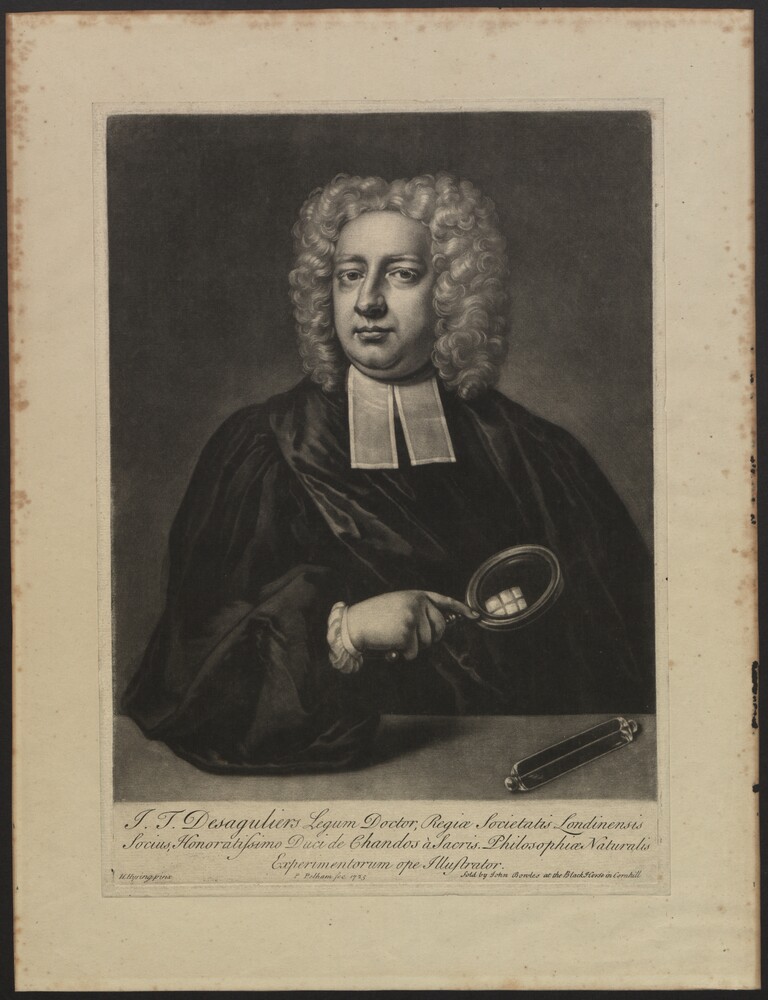 Print (Mezzotint Engraving) of J. T. Desaguliers, by Peter Pelham after Hans Hysing, with Separate Frame, 1725Inventory Number 13354
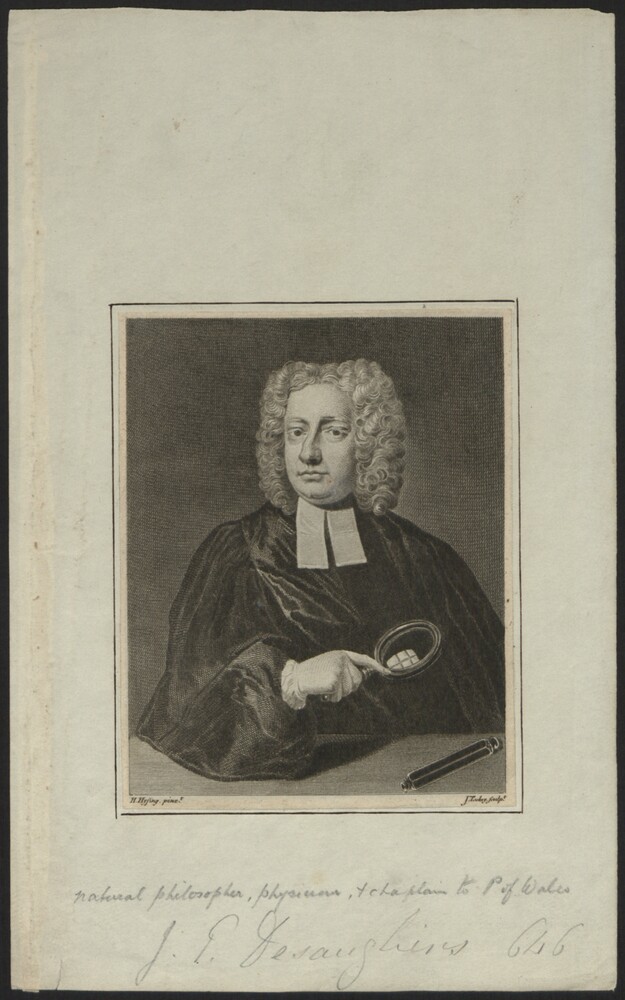 Print (Engraving) of J. T. Desaguliers, by James Tookey after Hans Hysing, Late 18th or Early 19th CenturyInventory Number 59227
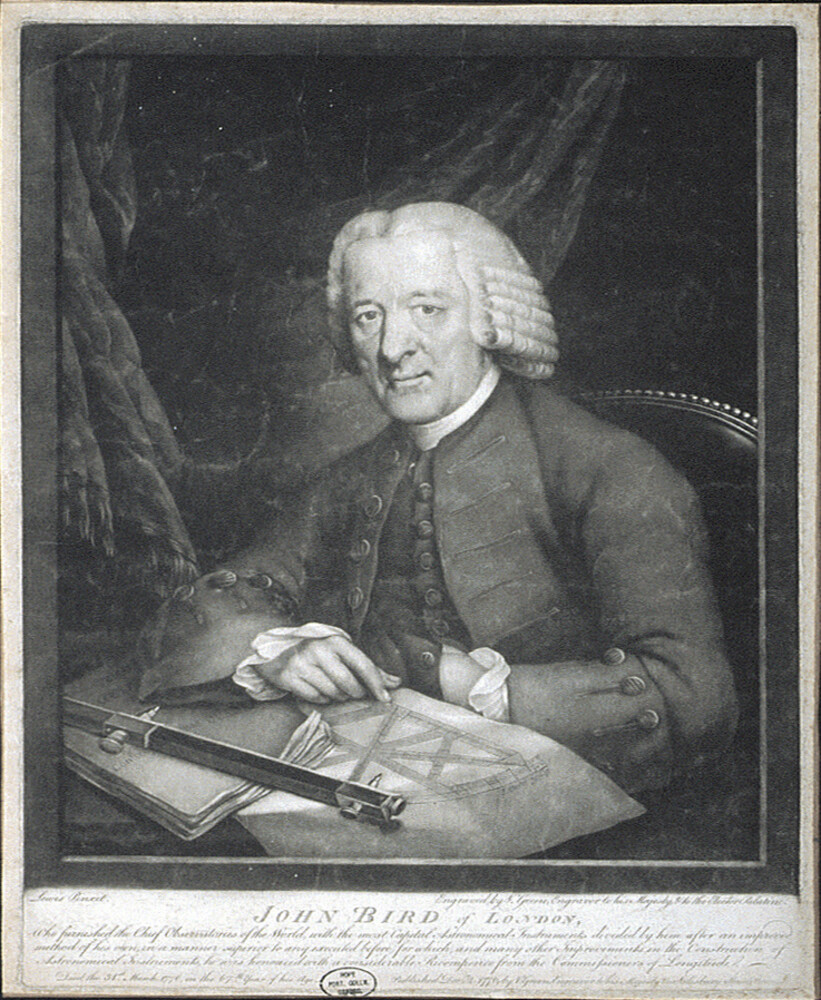 Print (Mezzotint, Engraving) of John Bird, by Valentine Green, after Lewis, published London,1776.Inventory Number 44092
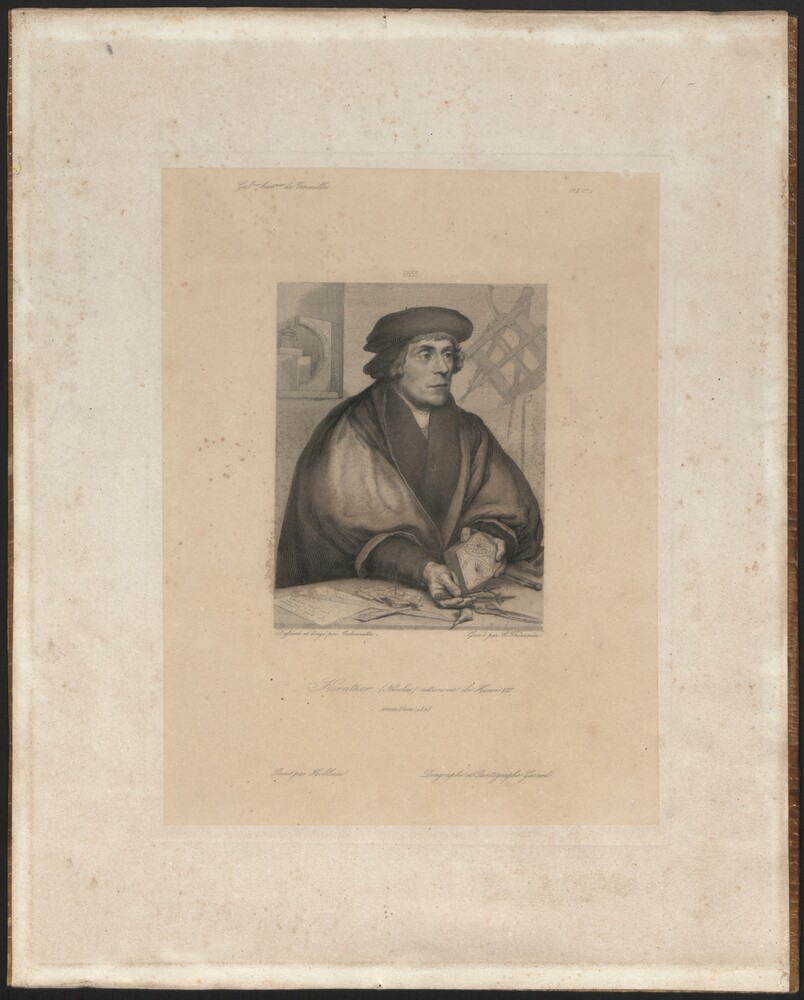 Print (Engraving) Nicolaus Kratzer, by Thévenin, after drawing by Luigi Calamatta, after painting by Hans Holbein, Published by Charles Gavard, France,1833Inventory Number 14220