- Item type
- Object
- Makers
- Johannes Schöner
- Provenance
- Lent by the Royal Astronomical Society in 2011. Previously on loan to the Science Museum, London, 1910 - 2011. Presented to the Royal Astronomical Society by the Earl of Crawford in 1894.
- Object type
- Celestial globe
- Dimensions
- Height: 430mm
- Inventory No
- 13311
- Accession Number
- 2011-17
Description
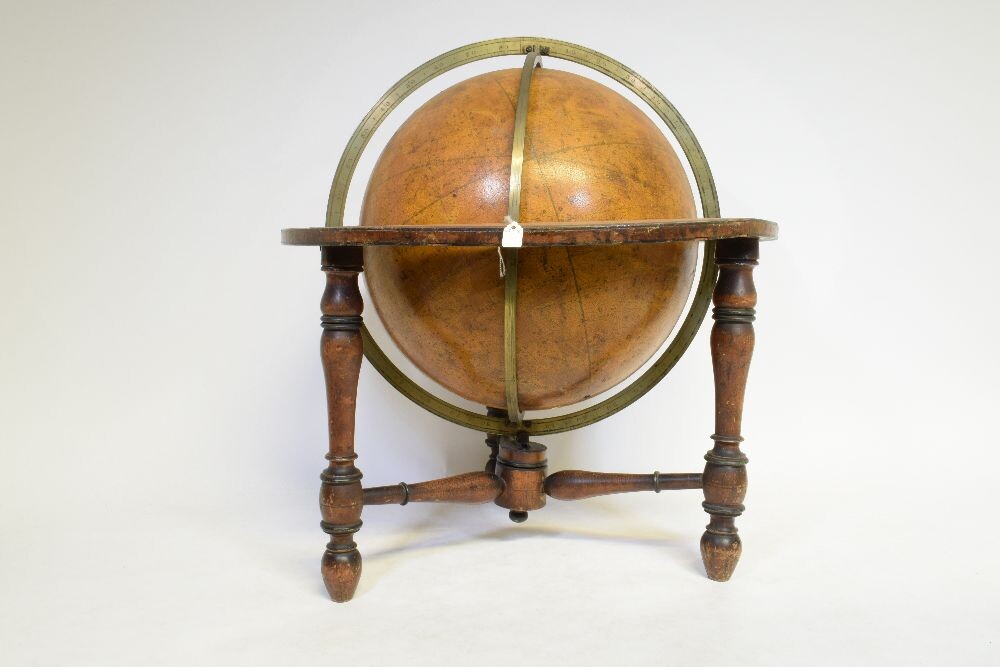
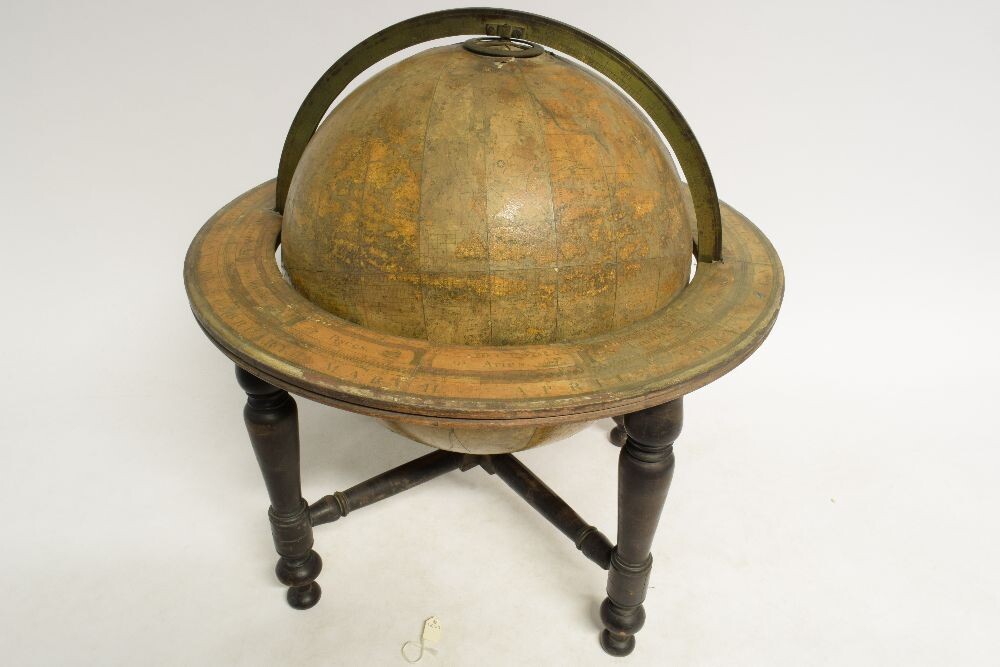
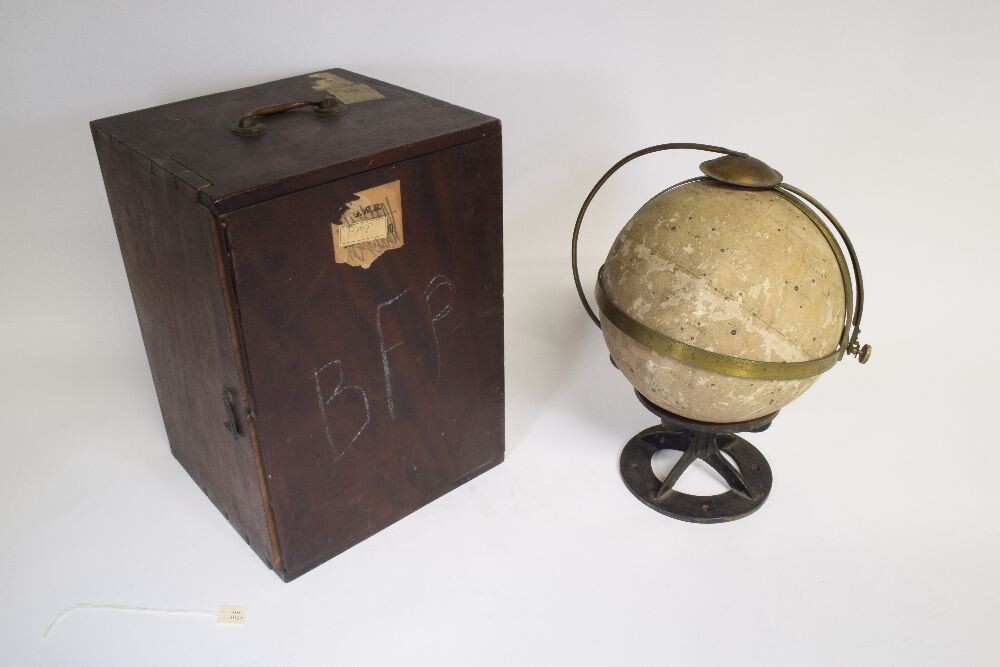
Celestial table globe, with stand and accompanying plumb bob and compass, by Johannes Schöner of Nuremberg. It is one of two known examples of the earliest surviving printed celestial globe. The woodcuts for the printed gores are known to have been completed by 1533, and the stand for this example is dated 1535.
The globe shows the constellations as described by Ptolemy, illustrated in colour against a black background, with star names are in Arabic. The body of the globe is supported by a tripod stand of cast bronze, which incorporates a plumb bob and compass (one of the tripod feet has a hole to receive the tooth of the compass whose plate sits on a cut surface). The north end of the globe axis carries a brass dial with pointer to set the geographic direction. Compass directions are given on the central brass ring.
For fuller descriptive and historical notes see narratives.