
- Brief Description
- Hand made acrylic model of the T bacteriophage designed and used by Dr. Desmond Kay
- Subject
- Medicine
- Item type
- Object
- Provenance
- Donated by the Dunn School of Pathology, University of Oxford
- Physical material
- plastic
- Object type
- Model
- Dimensions
- Height: 8.5cm Width: 26.5cm Depth: 9.5cm Weight: 0.55kg
- Inventory No
- 18623
Description
A clear plastic / acrylic model made in the workshop at the Sir William Dunn School of Pathology. It was designed and used for lectures by Dr. Desmond Kay who was an electron microscopist.
The model consists of a hexagonal chamber (representing the capsid or head), one end comes to a point and the other end has a long thin cylinder (tail tube). Within the chamber is a ball of string (the DNA), one end of which goes through the cylinder and out the end. Around the tail is a spring (the sheath) ending in a flat hexagonal baseplate with a rod in each corner (one is missing) (the tail fibres).
A T bacteriophage is a generic term for a group of bacteriophages, also known as phages, which are viruses that infect and replicate only in bacterial cells, destroying the cell they have infected. They are ubiquitous in the environment and are recognised as the most abundant biological agent on earth.
Related Items
More related items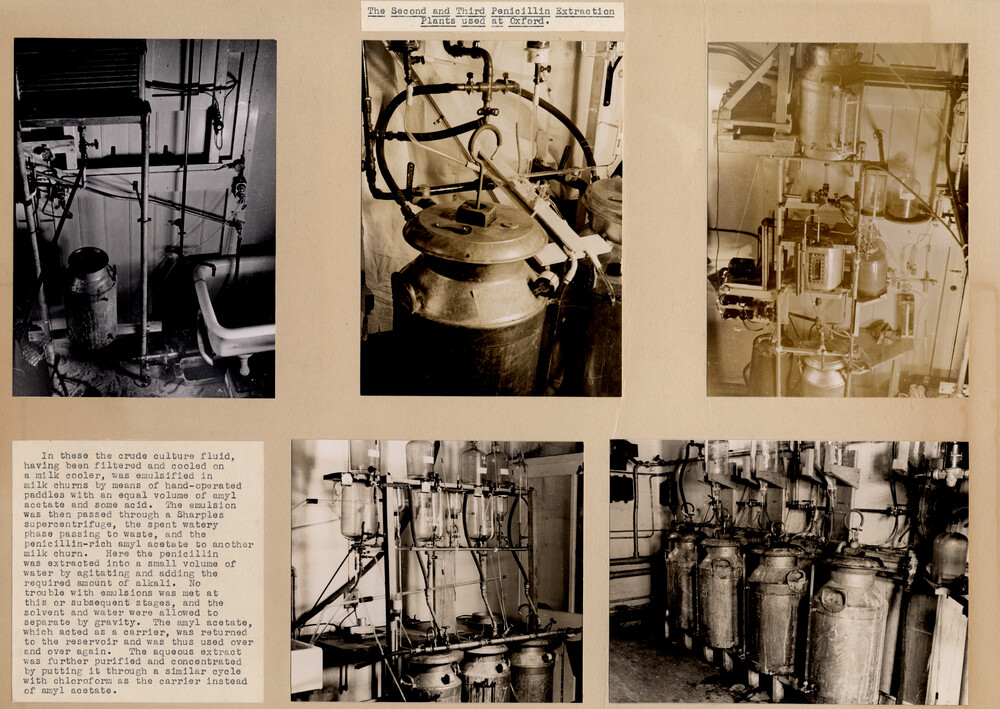 Five Photographs of Early Penicillin Apparatus at the Sir William Dunn School of Pathology, Oxford, Early 1940sInventory Number 14540
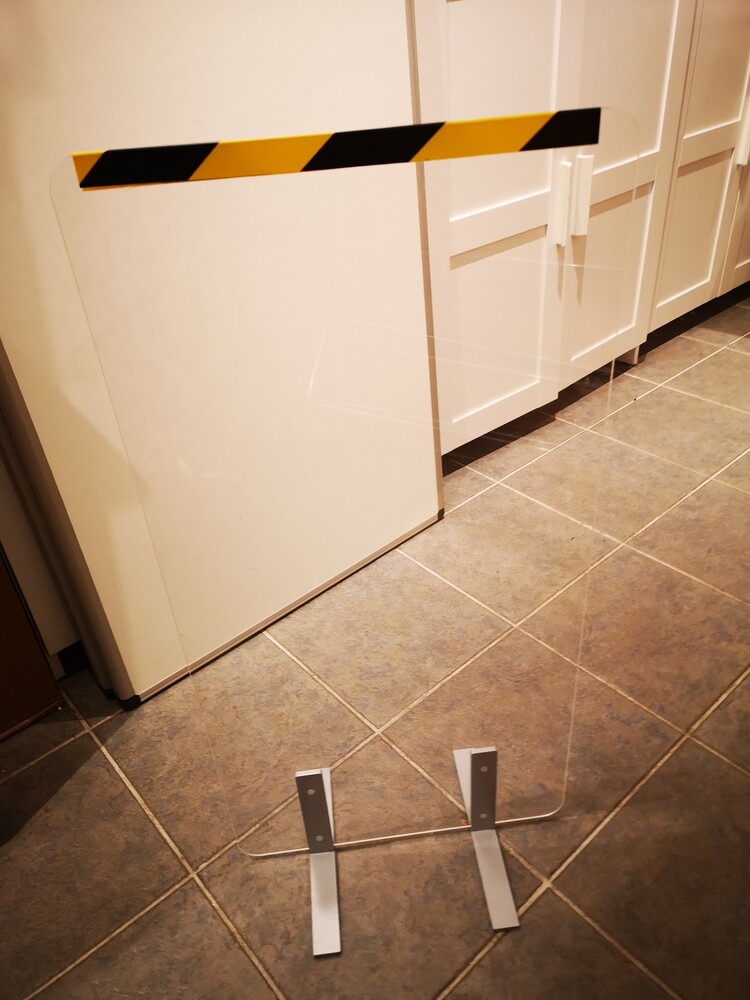 Dunn School Perspex lab bench screen for social distancingInventory Number 18595
 Microdialysis instrument and associated glassware, Norman Heatley, mid 20th centuryInventory Number 18645
 Model of Cephalosporin C, made by Edward Abraham, University of Oxford, pre1970.Inventory Number 18621