- Subject
- Microscopy
- Item type
- Object
- Provenance
- Purchased from Dr. Reginald S. Clay in 1944.
- Primary inscriptions
- None.
- Object type
- Microscope
- Dimensions
- Diameter: 98mm Height: 265mm
- Inventory No
- 52872
- Accession Number
- 1944-1/293
Description
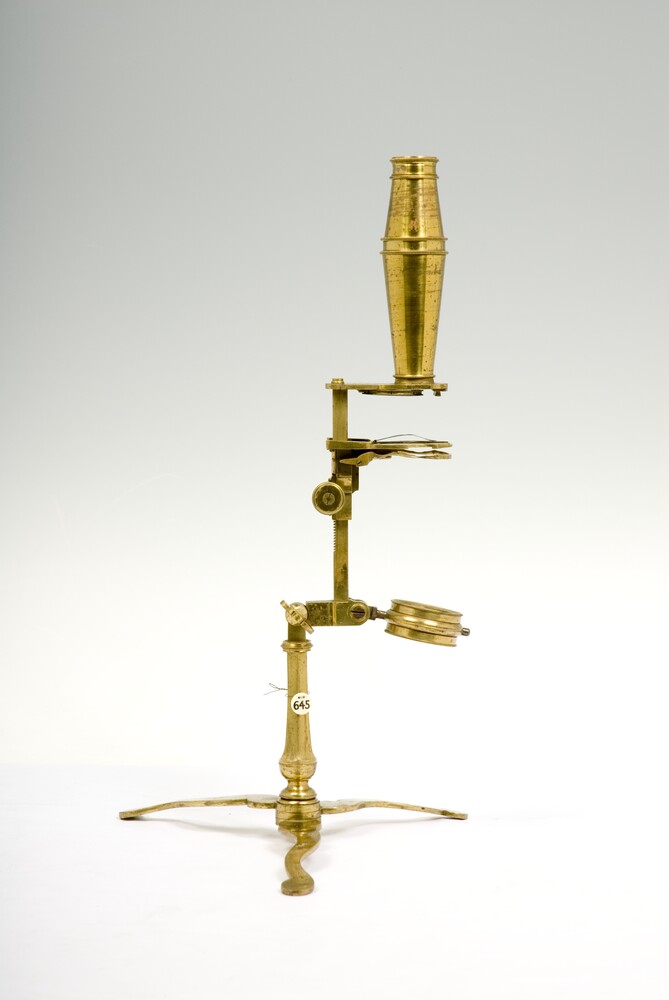
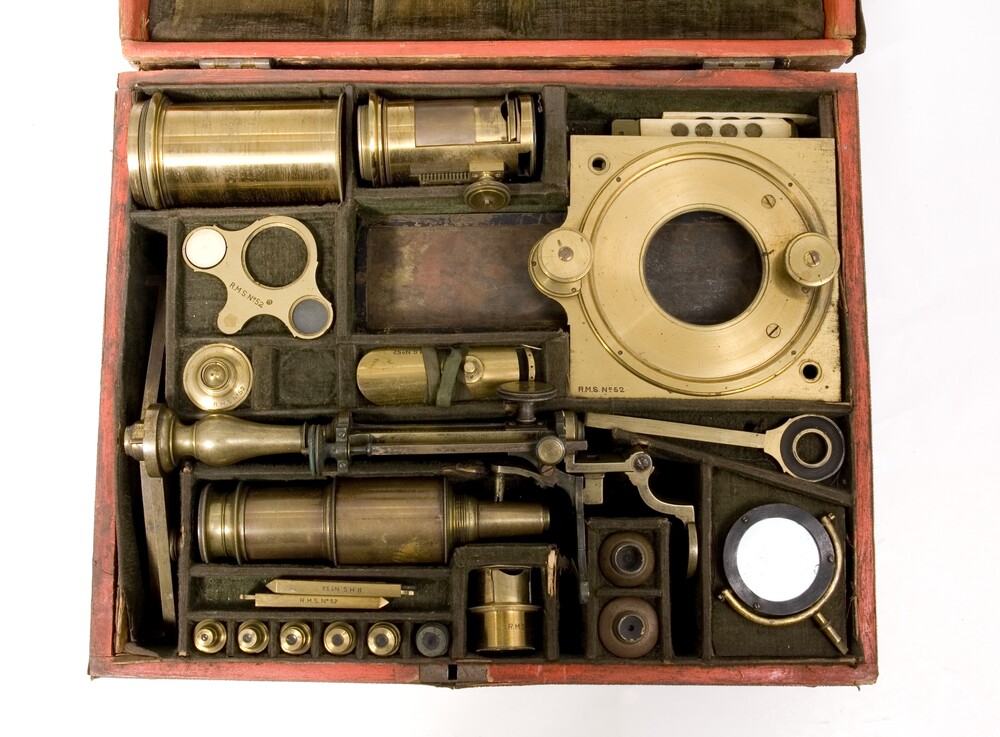
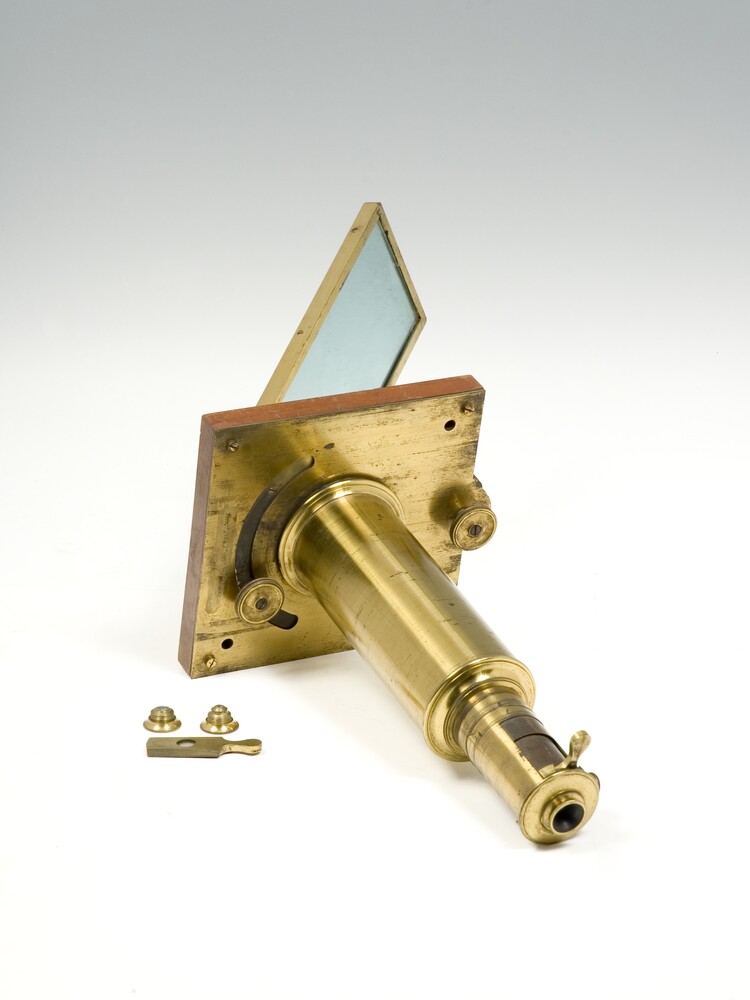
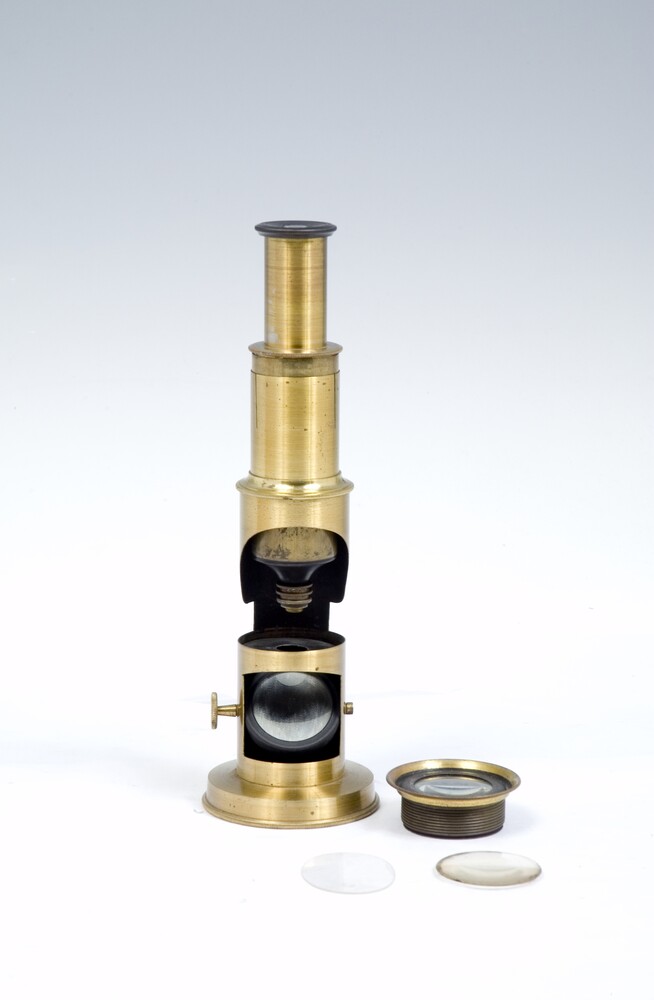
Sections made of cast copper alloy screw together to form either a drum or solar microscope. The main body tube is formed of two turned cylinders which fit together and hold a lens. A screw threaded dust cap fits on the end. The tube with the stage and objective lens attaches to this assembly. The stage is a copper alloy ring mounted on a spring. A threaded collar adjusts the focal length between the stage and the objective. To form a drum microscope these tubes attach to a housing with a plano-concave mirror on a horizontal pivot. The instrument stands on a circular base. The optical components attach to another tube containing a lens which screws onto a back plate to form a solar microscope. There are two knobs on the plate control the position and angle of the rectangular mirror. A copper alloy pin holds the mirror in place and there are two shutter screws. The additional accessories include a Lieberkühn in domed can, seven objectives, three glass phials, sixteen bone sliders all containing specimens, five wooden sliders all containing specimens, an empty large wooden slider, a glass slider with light green paper and a metal slider. The wooden rectangular case is decorated around the edge of the hinged lid with a wood inlay and curved beading coloured with a light green dye. There is also a decorative diamond shaped inlay around the keyhole and the fittings are metal. Inside the case there are various sized compartments, two of which have lids which are covered in red leather and have ivory handles. Green baize lines the interior. There is also a thin drawer at the base of the case with two handles; this drawer can be released by removing a long pin located next to the lock mechanism.